
Services

Bible Study - Online
After Saturday Vespers we take a deep dive into the lectionary readings for the week to date, or a specific book of scripture. This is repeated online on Sunday evening.

Vespers
Orthodox Saturday Vespers is the first service of the liturgical day, marking the transition from Saturday to Sunday. It is a service held in the early evening, typically around sunset, and serves as a preparation for the Divine Liturgy. Vespers includes hymns praising Christ's resurrection, reflecting the anticipation of the Lord's Day.
Bible Study
After Saturday Vespers we take a deep dive into the lectionary readings for the week to date, or a specific book of scripture.
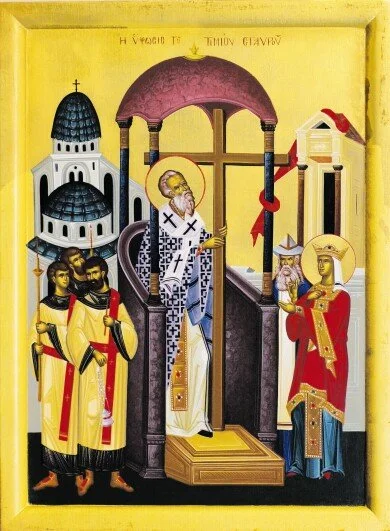
Matins - Sunday after Holy Cross
The morning service of the Church is called Matins. It opens with the reading of six morning psalms and the intoning of the Great Litany. After this, verses of Psalm 118 are sung: God is the Lord and has revealed himself unto us. Blessed is he who comes in the name of the Lord.
This service immediately precedes the Divine Liturgy. Anyone requiring confession is invited to make themselves known to the priest for this purpose during the service.
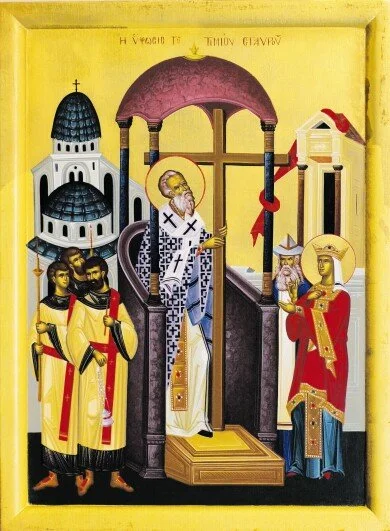
Typica - Sunday after Holy Cross
The Service of Typika is a short service used when the Divine Liturgy cannot be celebrated, when a priest is not available. It includes the pre-Communion psalms, the day's Divine Liturgy readings, and Hymns called troparia. The Epistle and Gospel readings are read, not chanted.
The service is followed by a bring and share lunch.
Come and see! Come and join us.
Bible Study - Online
After Saturday Vespers we take a deep dive into the lectionary readings for the week to date, or a specific book of scripture. This is repeated online on Sunday evening.
Vespers
Orthodox Saturday Vespers is the first service of the liturgical day, marking the transition from Saturday to Sunday. It is a service held in the early evening, typically around sunset, and serves as a preparation for the Divine Liturgy. Vespers includes hymns praising Christ's resurrection, reflecting the anticipation of the Lord's Day.
Matins - 1st Sunday of Luke
The morning service of the Church is called Matins. It opens with the reading of six morning psalms and the intoning of the Great Litany. After this, verses of Psalm 118 are sung: God is the Lord and has revealed himself unto us. Blessed is he who comes in the name of the Lord.
This service immediately precedes the Divine Liturgy. Anyone requiring confession is invited to make themselves known to the priest for this purpose during the service.
Typica - 1st Sunday of Luke
The Service of Typika is a short service used when the Divine Liturgy cannot be celebrated, when a priest is not available. It includes the pre-Communion psalms, the day's Divine Liturgy readings, and Hymns called troparia. The Epistle and Gospel readings are read, not chanted.
The service is followed by a bring and share lunch.
Come and see! Come and join us.
Bible Study - Online
After Saturday Vespers we take a deep dive into the lectionary readings for the week to date, or a specific book of scripture. This is repeated online on Sunday evening.
Vespers
Orthodox Saturday Vespers is the first service of the liturgical day, marking the transition from Saturday to Sunday. It is a service held in the early evening, typically around sunset, and serves as a preparation for the Divine Liturgy. Vespers includes hymns praising Christ's resurrection, reflecting the anticipation of the Lord's Day.
Bible Study
After Saturday Vespers we take a deep dive into the lectionary readings for the week to date, or a specific book of scripture.
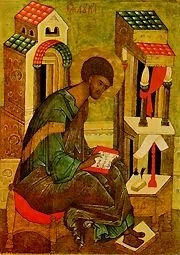
Matins - 2nd Sunday of Luke
The morning service of the Church is called Matins. It opens with the reading of six morning psalms and the intoning of the Great Litany. After this, verses of Psalm 118 are sung: God is the Lord and has revealed himself unto us. Blessed is he who comes in the name of the Lord.
This service immediately precedes the Divine Liturgy. Anyone requiring confession is invited to make themselves known to the priest for this purpose during the service.
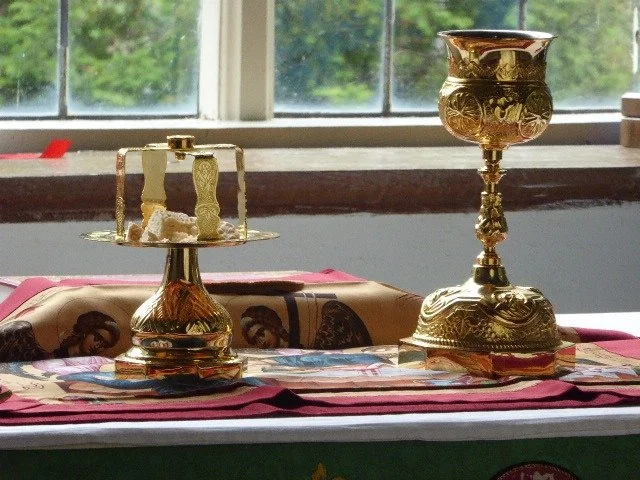
Divine Liturgy - 2nd Sunday of Luke
The Divine Liturgy is the primary worship service of the Church. It is a Eucharistic service and comprises two parts: Liturgy of the Word, at which the Scriptures are proclaimed and expounded; and the Liturgy of the Eucharist, in which the gifts of bread and wine are offered and consecrated; the faithful then partake of them in the Sacrament of Holy Communion.
The liturgy is followed by a bring and share lunch.
Come and see! Come and join us.

Annual AGM and Election of Church Council
Parish of St Anne and All Saints of Worcestershire holds its Church Council elections annually and requires an annual general meeting (AGM) for general administration and reporting as part of its governance
This immediately follows Typica.
Bible Study - Online
After Saturday Vespers we take a deep dive into the lectionary readings for the week to date, or a specific book of scripture. This is repeated online on Sunday evening.
Vespers
Orthodox Saturday Vespers is the first service of the liturgical day, marking the transition from Saturday to Sunday. It is a service held in the early evening, typically around sunset, and serves as a preparation for the Divine Liturgy. Vespers includes hymns praising Christ's resurrection, reflecting the anticipation of the Lord's Day.
Bible Study
After Saturday Vespers we take a deep dive into the lectionary readings for the week to date, or a specific book of scripture.
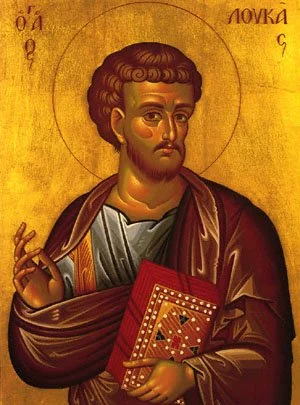
Typica - Luke the Evangelist
The Service of Typika is a short service used when the Divine Liturgy cannot be celebrated, when a priest is not available. It includes the pre-Communion psalms, the day's Divine Liturgy readings, and Hymns called troparia. The Epistle and Gospel readings are read, not chanted.
The service is followed by a bring and share lunch.
Come and see! Come and join us.
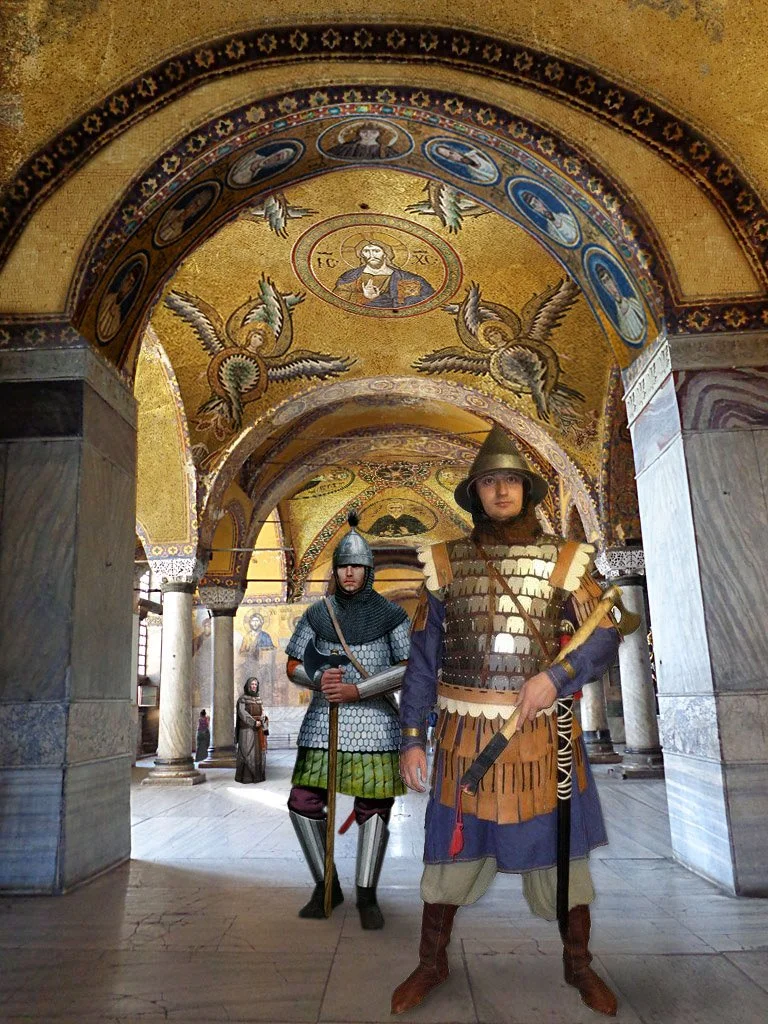
Varangians Youth Club and Sunday School
The Varangian Guard Youth Club is primarily for fellowship. The children meet after church, where they play, eat together and then have catechism activities.
The catechism is divided into nine different levels with eight tasks for each level. The children are awarded badges after each level. The children start as recruits and after completing all nine levels are awarded the Christ-bearer (Χριστόφορος) badge.
Bible Study - Online
After Saturday Vespers we take a deep dive into the lectionary readings for the week to date, or a specific book of scripture. This is repeated online on Sunday evening.
Vespers
Orthodox Saturday Vespers is the first service of the liturgical day, marking the transition from Saturday to Sunday. It is a service held in the early evening, typically around sunset, and serves as a preparation for the Divine Liturgy. Vespers includes hymns praising Christ's resurrection, reflecting the anticipation of the Lord's Day.
Bible Study
After Saturday Vespers we take a deep dive into the lectionary readings for the week to date, or a specific book of scripture.
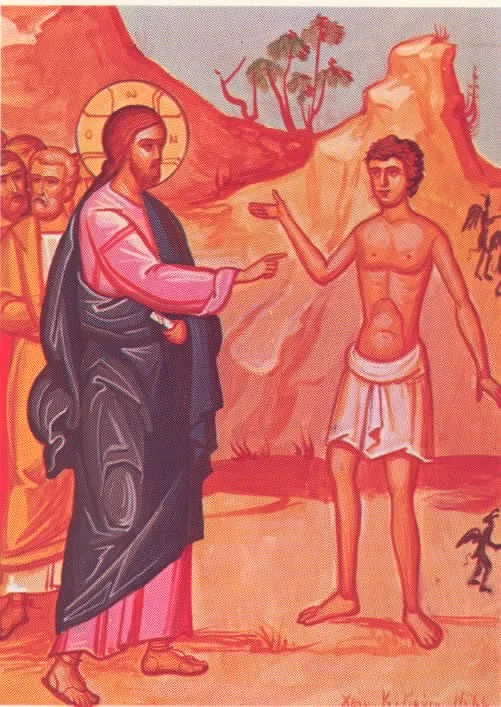
Matins - 6th Sunday of Luke
The morning service of the Church is called Matins. It opens with the reading of six morning psalms and the intoning of the Great Litany. After this, verses of Psalm 118 are sung: God is the Lord and has revealed himself unto us. Blessed is he who comes in the name of the Lord.
This service immediately precedes the Divine Liturgy. Anyone requiring confession is invited to make themselves known to the priest for this purpose during the service.
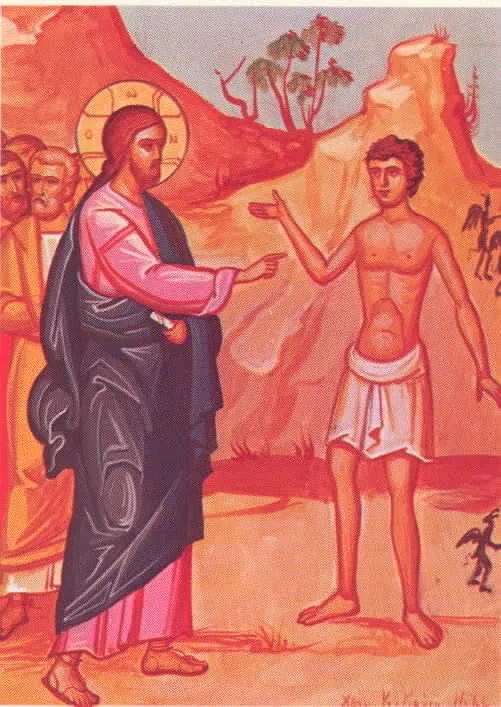
Typica - 6th Sunday of Luke
The Service of Typika is a short service used when the Divine Liturgy cannot be celebrated, when a priest is not available. It includes the pre-Communion psalms, the day's Divine Liturgy readings, and Hymns called troparia. The Epistle and Gospel readings are read, not chanted.
The service is followed by a bring and share lunch.
Come and see! Come and join us.
Bible Study - Online
After Saturday Vespers we take a deep dive into the lectionary readings for the week to date, or a specific book of scripture. This is repeated online on Sunday evening.
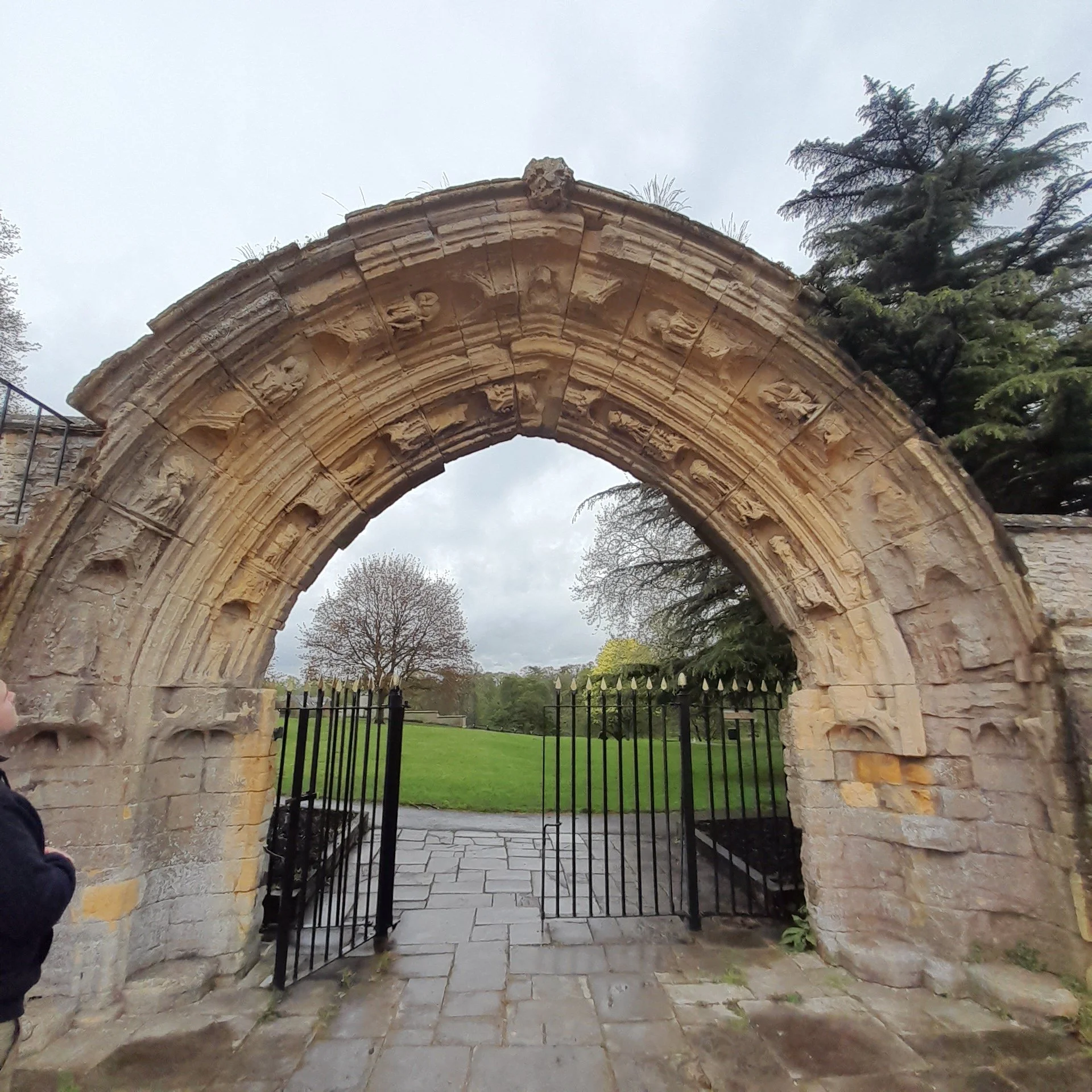
Our Lady and All Saints of Evesham Pilgrimage
This year’s pilgrimage will begin at St James Church, Badsey, where we will gather at 9:15 am for a prompt 9:30 am departure. Following the historic path once walked by the monks, we will make our way to the remains of Evesham Abbey in Abbey Park.
At the abbey, we hope to pray the Akathist to Our Lady of Evesham and all the saints of Evesham, before moving on to the Divine Liturgy at All Saints Church at 11:00 am.
After the service, we will enjoy lunch together—either a picnic outdoors or a meal at one of the many food outlets in Evesham, depending on the weather. At 1:30 pm, there will be a guided tour of the Abbey lands.
The day will draw to a close with Vespers at All Saints Church at 3:00 pm.
We warmly invite you to join us for this day of prayer, fellowship, and discovery, as we walk in the footsteps of the monks and give thanks for the holy heritage of Evesham.
If the weather is poor, we will meet at All Saints Church at 10:30 am.
This is the nearest Saturday to the feast day celebrating the translation of relics of St Egwin, 10 September. Our community patronal festival falls on 9 September.
The monk’s path is a walk over various surfaces and takes around an hour, depending on the pace.
Bible Study - Online
After Saturday Vespers we take a deep dive into the lectionary readings for the week to date, or a specific book of scripture. This is repeated online on Sunday evening.
Divine Liturgy - 14th Sunday of Matthew
The Divine Liturgy is the primary worship service of the Church. It is a Eucharistic service and comprises two parts: Liturgy of the Word, at which the Scriptures are proclaimed and expounded; and the Liturgy of the Eucharist, in which the gifts of bread and wine are offered and consecrated; the faithful then partake of them in the Sacrament of Holy Communion.
The liturgy is followed by a bring and share lunch.
Come and see! Come and join us.
Matins - 14th Sunday of Matthew
The morning service of the Church is called Matins. It opens with the reading of six morning psalms and the intoning of the Great Litany. After this, verses of Psalm 118 are sung: God is the Lord and has revealed himself unto us. Blessed is he who comes in the name of the Lord.
This service immediately precedes the Divine Liturgy. Anyone requiring confession is invited to make themselves known to the priest for this purpose during the service.
Bible Study
After Saturday Vespers we take a deep dive into the lectionary readings for the week to date, or a specific book of scripture.
Vespers
Orthodox Saturday Vespers is the first service of the liturgical day, marking the transition from Saturday to Sunday. It is a service held in the early evening, typically around sunset, and serves as a preparation for the Divine Liturgy. Vespers includes hymns praising Christ's resurrection, reflecting the anticipation of the Lord's Day.
Typica - 13th Sunday of Matthew
The Service of Typika is a short service used when the Divine Liturgy cannot be celebrated, when a priest is not available. It includes the pre-Communion psalms, the day's Divine Liturgy readings, and Hymns called troparia. The Epistle and Gospel readings are read, not chanted.
The service is followed by a bring and share lunch.
Come and see! Come and join us.
Matins - 13th Sunday of Matthew
The morning service of the Church is called Matins. It opens with the reading of six morning psalms and the intoning of the Great Litany. After this, verses of Psalm 118 are sung: God is the Lord and has revealed himself unto us. Blessed is he who comes in the name of the Lord.
This service immediately precedes the Divine Liturgy. Anyone requiring confession is invited to make themselves known to the priest for this purpose during the service.
Vespers
Orthodox Saturday Vespers is the first service of the liturgical day, marking the transition from Saturday to Sunday. It is a service held in the early evening, typically around sunset, and serves as a preparation for the Divine Liturgy. Vespers includes hymns praising Christ's resurrection, reflecting the anticipation of the Lord's Day.
Typica - 12th Sunday of Matthew
The Service of Typika is a short service used when the Divine Liturgy cannot be celebrated, when a priest is not available. It includes the pre-Communion psalms, the day's Divine Liturgy readings, and Hymns called troparia. The Epistle and Gospel readings are read, not chanted.
The service is followed by a bring and share lunch.
Come and see! Come and join us.
Matins - 12th Sunday of Matthew
The morning service of the Church is called Matins. It opens with the reading of six morning psalms and the intoning of the Great Litany. After this, verses of Psalm 118 are sung: God is the Lord and has revealed himself unto us. Blessed is he who comes in the name of the Lord.
This service immediately precedes the Divine Liturgy. Anyone requiring confession is invited to make themselves known to the priest for this purpose during the service.
Vespers
Orthodox Saturday Vespers is the first service of the liturgical day, marking the transition from Saturday to Sunday. It is a service held in the early evening, typically around sunset, and serves as a preparation for the Divine Liturgy. Vespers includes hymns praising Christ's resurrection, reflecting the anticipation of the Lord's Day.
Typica - 11th Sunday of Matthew
The Service of Typika is a short service used when the Divine Liturgy cannot be celebrated, when a priest is not available. It includes the pre-Communion psalms, the day's Divine Liturgy readings, and Hymns called troparia. The Epistle and Gospel readings are read, not chanted.
The service is followed by a bring and share lunch.
Come and see! Come and join us.
Matins - 11th Sunday of Matthew
The morning service of the Church is called Matins. It opens with the reading of six morning psalms and the intoning of the Great Litany. After this, verses of Psalm 118 are sung: God is the Lord and has revealed himself unto us. Blessed is he who comes in the name of the Lord.
This service immediately precedes the Divine Liturgy. Anyone requiring confession is invited to make themselves known to the priest for this purpose during the service.
Vespers
Orthodox Saturday Vespers is the first service of the liturgical day, marking the transition from Saturday to Sunday. It is a service held in the early evening, typically around sunset, and serves as a preparation for the Divine Liturgy. Vespers includes hymns praising Christ's resurrection, reflecting the anticipation of the Lord's Day.
Divine Liturgy - 9th Sunday of Matthew
The Divine Liturgy is the primary worship service of the Church. It is a Eucharistic service and comprises two parts: Liturgy of the Word, at which the Scriptures are proclaimed and expounded; and the Liturgy of the Eucharist, in which the gifts of bread and wine are offered and consecrated; the faithful then partake of them in the Sacrament of Holy Communion.
The liturgy is followed by a bring and share lunch.
Come and see! Come and join us.
Matins - 9th Sunday of Matthew
The morning service of the Church is called Matins. It opens with the reading of six morning psalms and the intoning of the Great Litany. After this, verses of Psalm 118 are sung: God is the Lord and has revealed himself unto us. Blessed is he who comes in the name of the Lord.
This service immediately precedes the Divine Liturgy. Anyone requiring confession is invited to make themselves known to the priest for this purpose during the service.
Vespers - The Holy Seven Maccabee Children, Solomone Their Mother, and Eleazar Their Teacher
Orthodox Saturday Vespers is the first service of the liturgical day, marking the transition from Saturday to Sunday. It is a service held in the early evening, typically around sunset, and serves as a preparation for the Divine Liturgy. Vespers includes hymns praising Christ's resurrection, reflecting the anticipation of the Lord's Day.
Typica - 8th Sunday of Matthew
The Service of Typika is a short service used when the Divine Liturgy cannot be celebrated, when a priest is not available. It includes the pre-Communion psalms, the day's Divine Liturgy readings, and Hymns called troparia. The Epistle and Gospel readings are read, not chanted.
The service is followed by a bring and share lunch.
Come and see! Come and join us.
Matins - 8th Sunday of Matthew
The morning service of the Church is called Matins. It opens with the reading of six morning psalms and the intoning of the Great Litany. After this, verses of Psalm 118 are sung: God is the Lord and has revealed himself unto us. Blessed is he who comes in the name of the Lord.
This service immediately precedes the Divine Liturgy. Anyone requiring confession is invited to make themselves known to the priest for this purpose during the service.
Vespers
Orthodox Saturday Vespers is the first service of the liturgical day, marking the transition from Saturday to Sunday. It is a service held in the early evening, typically around sunset, and serves as a preparation for the Divine Liturgy. Vespers includes hymns praising Christ's resurrection, reflecting the anticipation of the Lord's Day.
Typica - Sunday of the Holy Fathers of the 4th Ecumenical Council
The Service of Typika is a short service used when the Divine Liturgy cannot be celebrated, when a priest is not available. It includes the pre-Communion psalms, the day's Divine Liturgy readings, and Hymns called troparia. The Epistle and Gospel readings are read, not chanted.
The service is followed by a bring and share lunch.
Come and see! Come and join us.
Matins - Sunday of the Holy Fathers of the 4th Ecumenical Council
The morning service of the Church is called Matins. It opens with the reading of six morning psalms and the intoning of the Great Litany. After this, verses of Psalm 118 are sung: God is the Lord and has revealed himself unto us. Blessed is he who comes in the name of the Lord.
This service immediately precedes the Divine Liturgy. Anyone requiring confession is invited to make themselves known to the priest for this purpose during the service.
Vespers
Orthodox Saturday Vespers is the first service of the liturgical day, marking the transition from Saturday to Sunday. It is a service held in the early evening, typically around sunset, and serves as a preparation for the Divine Liturgy. Vespers includes hymns praising Christ's resurrection, reflecting the anticipation of the Lord's Day.
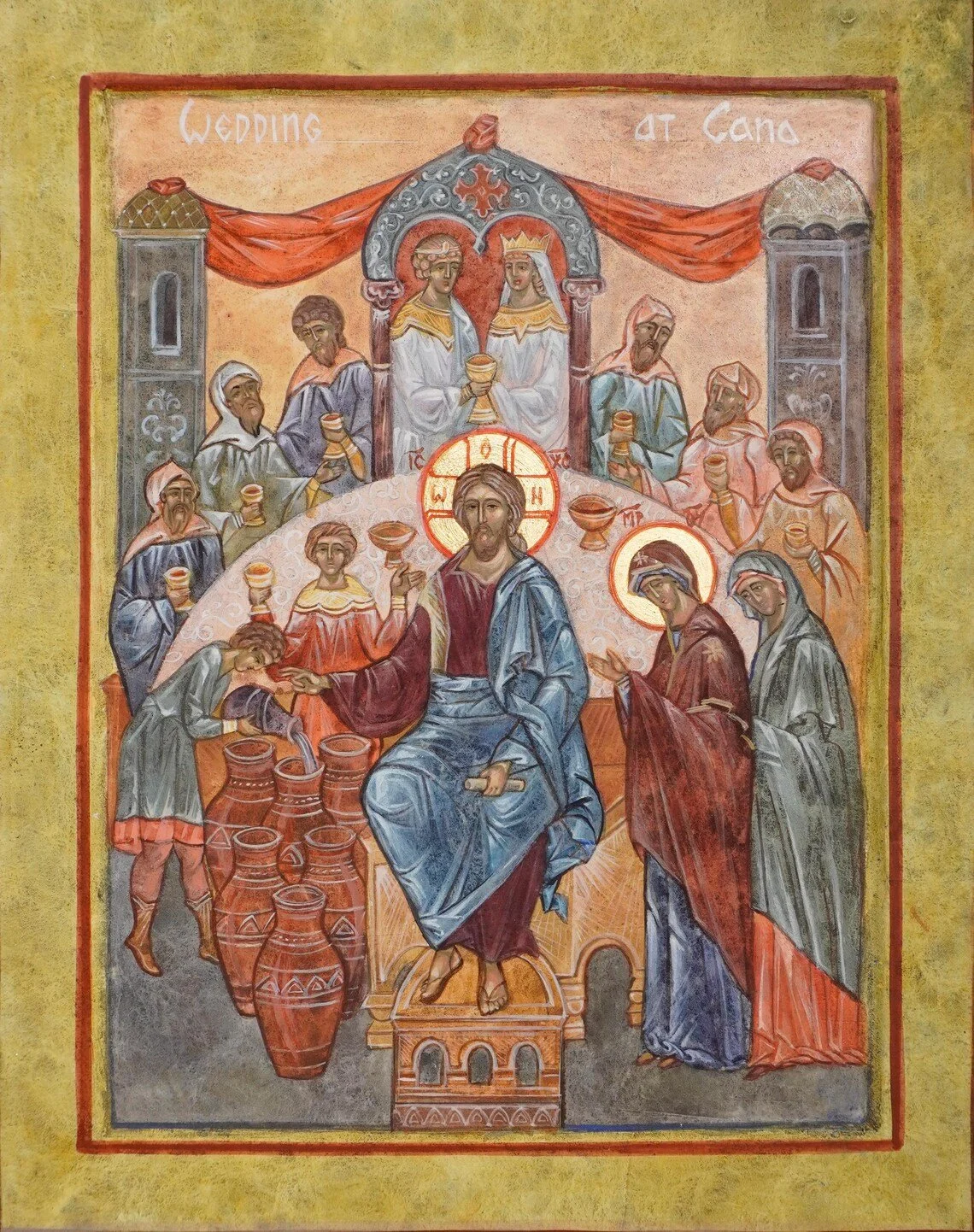
Wedding of Theodora and Paisios
Please stay after the Liturgy and celebrate the wedding of Theodora and Paisios. Congregation members are also invited to stay for the reception afterwards.
Come and see! Come and join us.
Divine Liturgy - 5th Sunday of Matthew
The Divine Liturgy is the primary worship service of the Church. It is a Eucharistic service and comprises two parts: Liturgy of the Word, at which the Scriptures are proclaimed and expounded; and the Liturgy of the Eucharist, in which the gifts of bread and wine are offered and consecrated; the faithful then partake of them in the Sacrament of Holy Communion.
The liturgy is followed by a bring and share lunch.
Come and see! Come and join us.
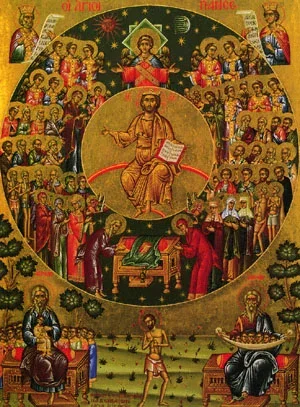
Matins - 5th Sunday of Matthew
The morning service of the Church is called Matins. It opens with the reading of six morning psalms and the intoning of the Great Litany. After this, verses of Psalm 118 are sung: God is the Lord and has revealed himself unto us. Blessed is he who comes in the name of the Lord.
This service immediately precedes the Divine Liturgy. Anyone requiring confession is invited to make themselves known to the priest for this purpose during the service.
Vespers
Orthodox Saturday Vespers is the first service of the liturgical day, marking the transition from Saturday to Sunday. It is a service held in the early evening, typically around sunset, and serves as a preparation for the Divine Liturgy. Vespers includes hymns praising Christ's resurrection, reflecting the anticipation of the Lord's Day.
Bible Study - Online
After Saturday Vespers we take a deep dive into the lectionary readings for the week to date, or a specific book of scripture. This is repeated online on Sunday evening.
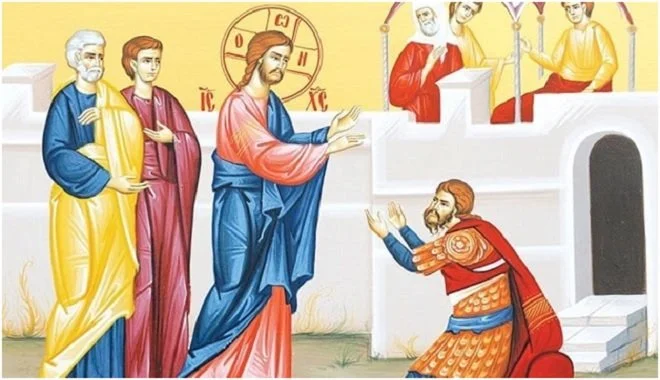
Typica - 4th Sunday of Matthew - Healing of the Centurion’s Servant
The Service of Typika is a short service used when the Divine Liturgy cannot be celebrated, when a priest is not available. It includes the pre-Communion psalms, the day's Divine Liturgy readings, and Hymns called troparia. The Epistle and Gospel readings are read, not chanted.
The service is followed by a bring and share lunch.
Come and see! Come and join us.